From Process Maps to Predictive Intelligence
Traditional process mining helped organizations visualize how work really happens by turning event logs into process maps. It’s great for identifying bottlenecks, but it stops at what happened.
Now, with Artificial Intelligence (AI) and Machine Learning (ML), process mining can explain why things happen and what will happen next. This evolution, known as intelligent process mining, is transforming static analysis into continuous, predictive insight.
1. What Traditional Process Mining Does (and Doesn’t Do)
Traditional process mining reconstructs workflows from system logs to uncover inefficiencies. It typically focuses on:
- Discovery: This involves automatically extracting data from IT systems to create a factual, end-to-end visualization of how processes actually function, rather than how people assume they do.
- Conformance checking: By comparing the "as-is" process discovered from data against the "to-be" reference model, organizations can pinpoint exactly where deviations, skips, or unauthorized steps are occurring.
Enhancement: This phase focuses on using the gathered insights to repair or evolve the existing process model, ensuring that workflows are continuously refined to improve throughput and resource allocation.
While valuable, it has limits: it’s descriptive, not predictive, and relies heavily on clean data and manual analysis. As Gartner points out, process mining reaches its full potential when paired with AI for automated, intelligent insights.
2. How AI and ML Are Changing the Game
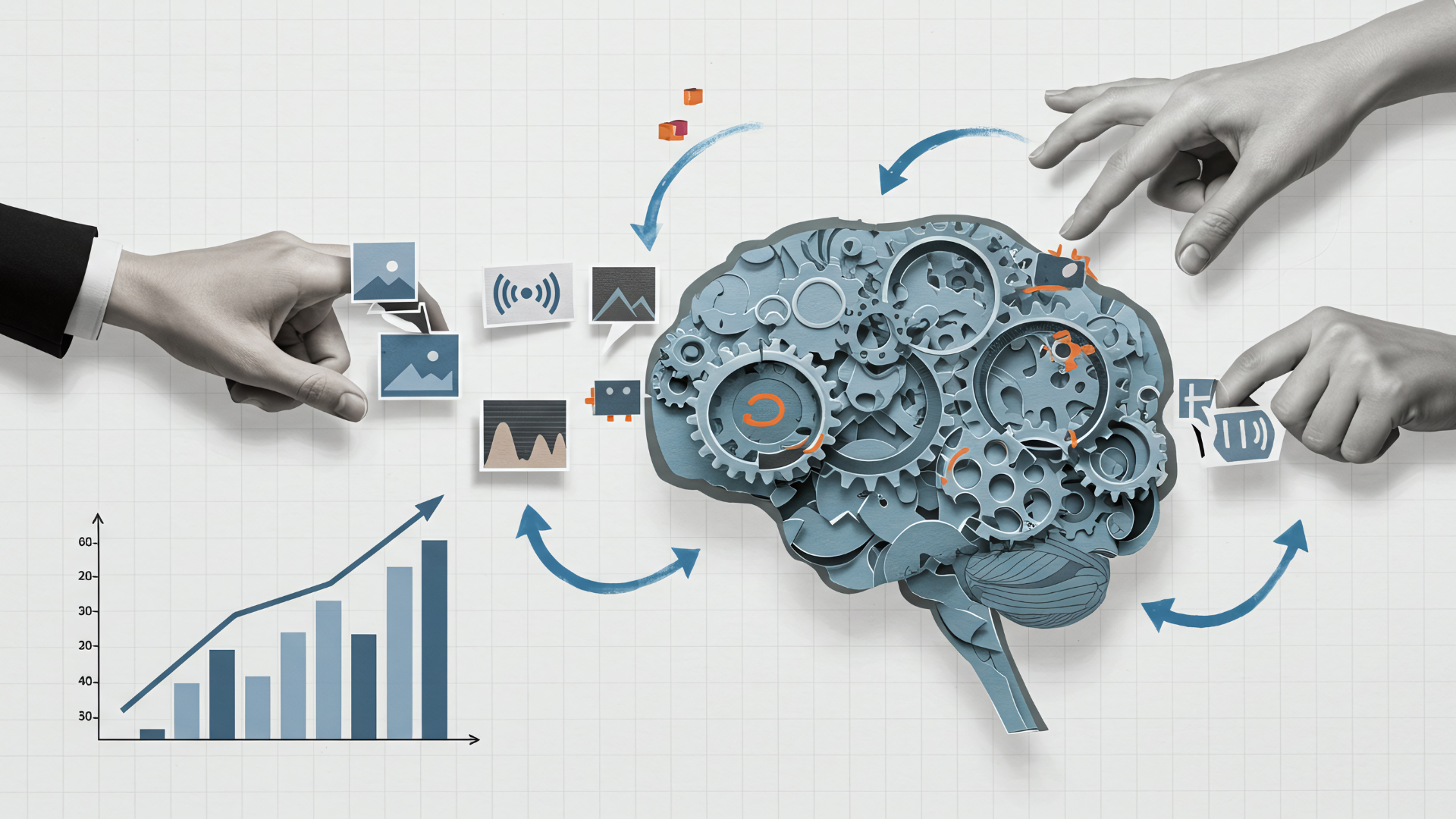
AI and ML bring scale, speed, and intelligence to process mining. Together, they form the foundation of Intelligent Process Mining (IPM), a new era of automated discovery, prediction, and optimization.
- AI identifies patterns, anomalies, and trends.
- ML learns from data to forecast and prescribe outcomes.
According to Deloitte, companies using AI-driven process mining see faster time-to-insight and reduced manual effort, especially when combining it with advanced analytics.
3. Key Innovations in Intelligent Process Mining
- Automated Discovery: AI automatically uncovers hidden process variations, no predefined models required. It handles messy, unstructured data and continuously updates as new events occur.
- Anomaly Detection & Clustering: ML algorithms detect deviations and group similar behaviors, helping teams pinpoint root causes of inefficiencies or compliance risks faster than manual reviews.
- Predictive & Prescriptive Mining: Predictive models forecast outcomes like delays or compliance breaches, while prescriptive analytics recommends actions to prevent them. It’s not just what went wrong, it’s how to fix it before it happens.
NLP & Intelligent Automation: Natural Language Processing (NLP) helps analyze unstructured text, while integration with Robotic Process Automation (RPA) lets systems act on findings automatically.
4. Why It Matters: Benefits of AI in Process Mining
AI-driven process mining transforms how businesses optimize performance:
- Real-time visibility and faster insights
- Proactive issue prevention
- Enhanced compliance and risk detection
- Scalable analysis across millions of transactions
- Continuous improvement without manual intervention
It’s not just operational, it’s strategic. Companies using AI in process mining improve efficiency, cut costs, and strengthen decision-making.
5. Real-World Impact
AI-powered process mining is already making a difference across various sectors:
- Finance: Banks and financial institutions utilize AI to monitor transaction flows in real-time, allowing them to instantly flag fraudulent patterns and ensure strict adherence to global regulatory standards.
- Manufacturing: By analyzing sensor data and production logs, manufacturers can predict equipment failures and identify subtle bottlenecks that, if left unaddressed, would lead to costly downtime.
- Healthcare: Hospitals apply intelligent mining to patient data to streamline administrative journeys, improve the accuracy of complex medical billing, and ensure faster delivery of care.
- Retail: Retailers gain granular visibility into their supply chains, enabling them to anticipate inventory shortages and optimize logistics routes to significantly reduce lead times for customers.
A recent IBM report shows AI-based process mining can cut process cycle times by up to 40%.
6. Challenges to Keep in Mind
Adoption of these advanced technologies comes with specific hurdles that organizations must navigate:
- Data quality and integration issues: The effectiveness of AI is entirely dependent on the quality of the underlying data, making it difficult to extract value from fragmented or inconsistent legacy systems.
- Lack of explainability in complex ML models: As algorithms become more sophisticated, it can be challenging for stakeholders to understand the "black box" logic behind certain automated recommendations or predictions.
- Governance and bias in automated decisions: Organizations must implement strict oversight to ensure that AI models do not inadvertently codify human biases or make decisions that violate ethical standards.
The need for collaboration: Bridging the gap between technical data scientists and the process experts who understand the business context is essential for turning theoretical insights into practical improvements.
7. The Road Ahead
The future of intelligent process mining is real-time, self-optimizing, and deeply integrated into business ecosystems. Expect to see:
- Digital twins for process simulation: Organizations will increasingly use "Digital Twins of an Organization" (DTOs) to test "what-if" scenarios in a virtual environment before implementing changes in the real world.
- No-code AI platforms for accessibility: The democratization of these tools will allow non-technical business users to build and deploy their own predictive models without needing a deep background in data science.
- Unified process intelligence ecosystems: We will see a shift toward holistic platforms that seamlessly combine process mining, advanced business analytics, and automation into a single, cohesive workflow.
Gartner predicts that by 2026, more than half of large enterprises will use AI-driven process intelligence for continuous improvement.





.jpg)
.jpg)
.jpg)
.jpg)


.jpg)

.jpg)



















.jpg)
%20(1).jpg)

.jpg)

.jpg)
.png)


