


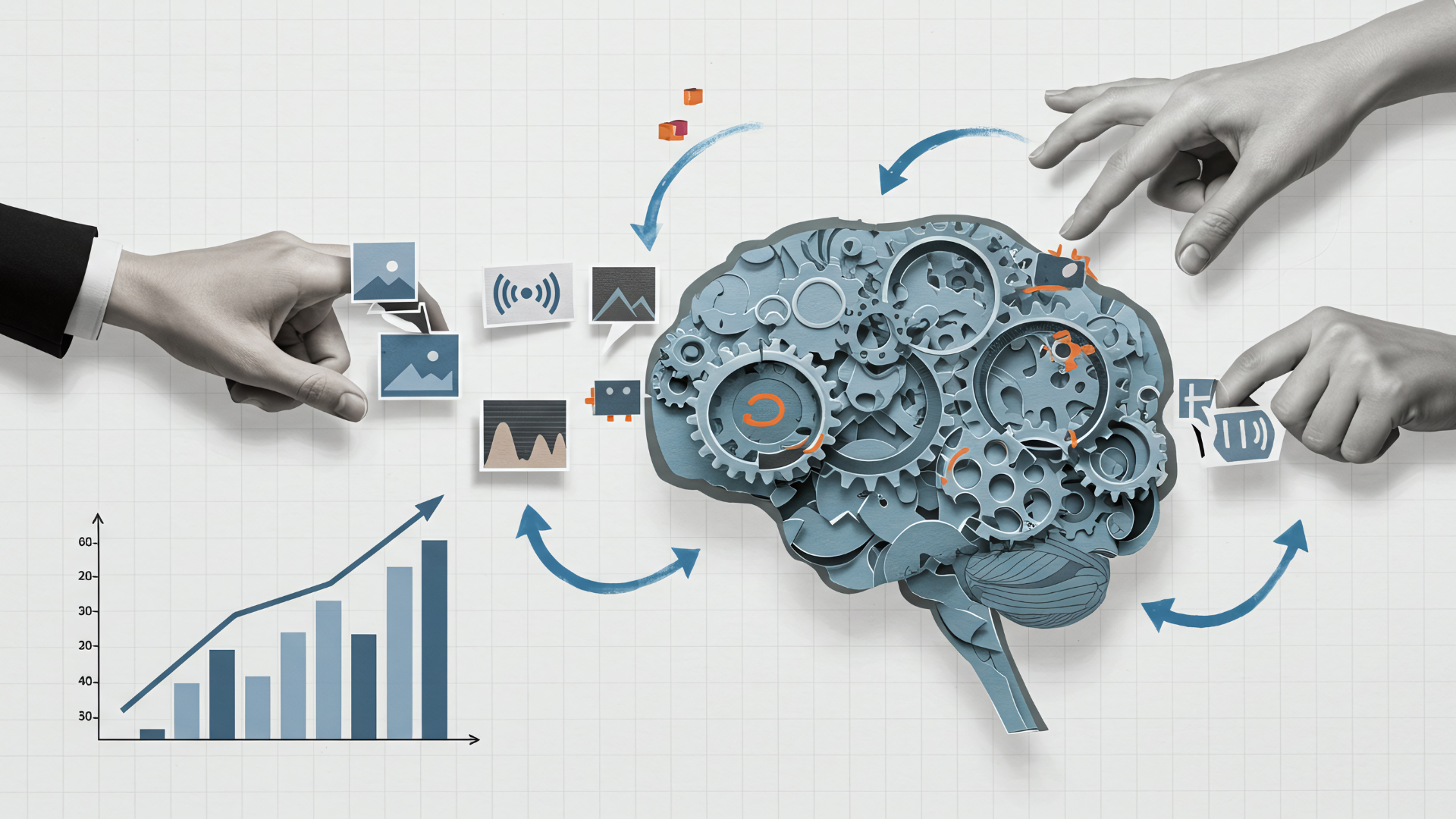
In the modern enterprise, data is everywhere, yet clarity is scarce. Organizations are drowning in digital footprints, timestamps, transaction logs, and audit trails, but often struggle to answer the simplest question: "Why is this process taking so long?"
For years, Process Mining has been the flashlight in the dark, illuminating how work actually flows through an organization compared to how it was designed. But in an era where speed is the currency of survival, a flashlight isn't enough. You need a GPS that predicts traffic jams before you hit them and automatically reroutes your journey.
This is where Artificial Intelligence (AI) enters the equation. By fusing the forensic visibility of process mining with the predictive power of AI, businesses are moving beyond static analytics into the era of Process Intelligence.
This article explores how AI in process mining is transforming operational data into a proactive optimization engine, the role of Generative AI, and why this technology is the new standard for operational excellence.
To understand the impact of AI, we must first look at the limitations of traditional process mining. Historically, process mining was descriptive. It looked at historical event logs to visualize the "happy path" (the ideal workflow) versus the messy reality of deviations and bottlenecks. It answered the question: "What happened?"
While valuable, this approach is reactive. It tells you that your supply chain broke down last month, but it does little to prevent a breakdown tomorrow.
AI-Enhanced Process Mining shifts the focus from reactive to predictive and prescriptive:
According to recent reports by Gartner, the market is aggressively pivoting toward these "Process Intelligence" platforms, where the value lies not just in seeing the process, but in fixing it autonomously.
Until recently, extracting insights from process mining tools required a data scientist or a specialized analyst who could write complex queries (SQL or PQL). Generative AI (GenAI) has democratized this capability, lowering the barrier to entry for business users.
By integrating Large Language Models (LLMs) into process mining platforms, vendors are creating "Process Copilots" that allow users to interact with their data using natural language.
Key Capabilities of GenAI in Process Mining:
Synthetic Data Generation: For organizations worried about data privacy, AI can generate synthetic event logs that mimic the statistical properties of real data. This allows teams to test "what-if" optimization scenarios without exposing sensitive customer or employee information.
AI doesn't just make charts look better; it drives hard ROI across various business functions. Here is how AI in process mining is being applied today:
Supply chains are vulnerable to the "Bullwhip Effect," where small fluctuations in demand cause massive disruptions upstream.
The AI Fix: AI models correlate internal process logs with external data (weather, geopolitical news, port congestion). If a supplier in a specific region is predicted to face delays, the system can automatically suggest alternative suppliers with available stock and shorter lead times.
Accounts Payable (AP) departments lose millions annually to duplicate payments, missed early-payment discounts, and fraud.
In CS, the "Order-to-Cash" cycle is critical. A delay here means dissatisfied customers and churn.
Unplanned downtime is the enemy of manufacturing efficiency.
The AI Fix:Predictive Maintenance combines machine sensor data (IoT) with process logs. If a machine’s vibration metrics deviate from the norm during a specific production step, the AI triggers a maintenance work order before the machine fails, preventing a line stoppage.
Implementing AI-driven process mining is not just an IT upgrade; it is a strategic business transformation.
The Self-Healing Enterprise: Perhaps the most significant benefit is the move toward continuous improvement. Unlike a one-time audit, AI monitors processes 24/7. It creates a feedback loop where the system constantly learns from new data, refining its predictions and recommendations over time.
While the technology is powerful, it is not a magic wand. Organizations must navigate several hurdles to realize the full potential of AI in process mining.
Integration Complexity: Modern enterprises run on a complex web of systems (SAP, Salesforce, Oracle, custom apps). Connecting these disparate data sources into a unified process mining model requires robust data engineering and API integration strategies.
The convergence of AI and Process Mining marks a pivotal shift in business intelligence. We are moving away from dashboards that merely report on the past and toward intelligent systems that actively shape the future.
As we look ahead, the rise of Object-Centric Process Mining (OCPM) and autonomous agents suggests a future where businesses don't just manage processes, they allow them to self-heal. In this future, the enterprise operates like a living organism, adapting to changes in the market instantly and efficiently.
Are your processes working for you, or are you working for your processes?
If you are ready to move beyond static reports and harness the power of predictive intelligence, it is time to audit your current process maturity.
Contact our Process Intelligence Team today to schedule a personalized demo and discover how AI can uncover hidden value in your event logs.


Get Updates and announcements from the Verdant Data Team
You can unsubscribe any time. Learn more about our Privacy Policy


.jpg)
.jpg)
.jpg)
.jpg)


.jpg)

.jpg)



















.jpg)
%20(1).jpg)


.jpg)

.jpg)
.png)


